A Malaise at the Heart of Labour?
The article in SP!KED by Robin Wales and Clive Furness as elicited some interesting responses. Labour members who currently serve in elected office representing the Labour Party have told Open Newham that they agree with the arguments and concerns raised, though they remain in the party.
Increasingly, we are getting reports that members of ethnic minorities are getting dissatisfied with Labour. The identitarian politics that now bedevils the borough and the country is alienating many children of immigrants for whom the UK, not the sub-continent, is home and Labour’s acquiescence to the demands of political Islam is likely to push some of these away from their traditional political allegiances.
The beneficiary of this movement is not Kemi Badenoch, nor the Lib-Dems or the Greens. The person who speaks for them is one Nigel Farage.
Let that sink in. Open Newham has received reports that Africans, Caribbeans and above all, South Asians are all thinking of voting for Reform.
How many people this represents is unknown and unknowable, at least until the elections in May. But having hitched their wagon to identity politics, Labour must now be concerned that people are rejecting communitarian politics.
It would seem that Labour in Newham is now facing a challenge from three directions, Newham Independents must be the strongest challenge, but the Greens in the north and Reform in the south look very likely to take seats from Labour.
Labour’s malaise is causing members to doubt whether the party of today is the same Labour Party they joined. Ayesha Chowdhury was a Newham councillor between 2002 and 2022. She remains in the Labour Party, but below, in her own words she explains why this is becoming increasingly difficult.
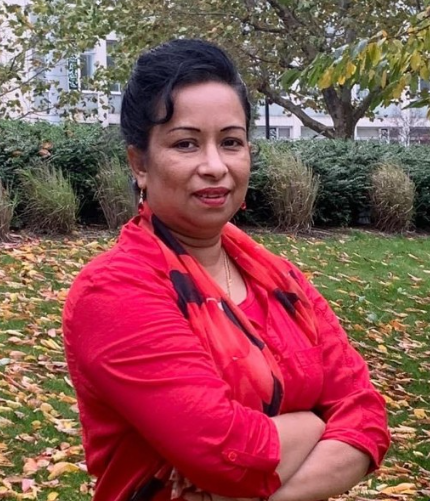
Labour’s Moral Crisis: Why Long-Standing Members Like Me Feel Forced to Walk Away
I never imagined I would publicly question the leadership of the party I served for most of my adult life. After nearly 30 years as a Labour member and 20 years as an elected Labour councillor, writing these words feels like a personal failure as much as a political one. But silence, at this point, feels worse.
Labour was not just my political home—it was my moral compass. I defended its values in my community, in public forums, and on international satellite television channels watched by audiences in Britain and abroad. I did so proudly, believing Labour stood for integrity, justice and accountability.
Today, I write with a heavy heart and a growing sense of shame.
Loyalty to a political party should never require silence in the face of ethical failure. Yet under the current Labour leadership, many long-standing members feel precisely that pressure: to stay quiet, to look away, to accept behaviour that would once have been challenged without hesitation.
The Prime Minister, as Labour leader, carries not only political authority but moral responsibility. Leadership is not measured solely by legality. It is measured by judgment—by the willingness to draw clear ethical boundaries, even when doing so is politically uncomfortable.
This is where many of us feel Labour is failing.
The continued political protection of Tulip Siddiq MP, despite persistent and widely reported allegations of corruption and her close familial ties to a former foreign prime minister accused by international observers of serious human rights abuses, has deeply unsettled grassroots members.
Politics is a relationship built on trust. That trust is now fragile.
For years, I appeared on community and international satellite channels such as Channel S, NTV Europe, Islam Channel, and ATN Bangla. On those platforms, I argued that British politics was fundamentally different from the politics many viewers had experienced elsewhere—more transparent, more accountable, more ethical. I spoke with confidence and belief.
Increasingly, I struggle to make that argument with honesty.
Recent controversies involving senior Labour figures have reopened painful questions about standards and accountability. The re-emergence of figures associated with past ethical scandals, including the Peter Mandelson issue, has caused deep embarrassment among Labour activists nationwide. For those of us who spent decades defending Labour’s integrity, this moment feels particularly bruising.
Many of my senior colleagues—people who gave their lives to this movement—have quietly walked away. Some have joined other parties. Others have withdrawn from politics altogether, disillusioned and exhausted. These are not extremists or opportunists. They are the backbone of Labour’s history.
What hurts most is not political disagreement. It is the sense that Labour is losing its moral clarity. When leadership appears willing to overlook or downplay serious ethical concerns for the sake of political survival, it sends a devastating message to members and voters alike.
Even the perception that unethical behaviour is being tolerated—or that powerful individuals are being protected—undermines everything Labour claims to stand for. A leader who is aware of these concerns and continues to offer political cover risks appearing complicit, whether intentionally or not. That perception alone is corrosive.
This is not just a Labour problem. It is a national one.
When trust in political leadership erodes, democracy weakens. When people believe that standards apply differently to those at the top, cynicism replaces engagement. Britain’s reputation as a country governed by principle rather than expediency is diminished.
As someone who has worked closely with young people, communities, and voluntary organisations, I see the consequences firsthand. People disengage. They stop believing politics can be a force for good.
Unless Labour confronts this crisis honestly and recommits to clean, transparent, and principled leadership, many long-standing members like myself will have no choice but to walk away.
Not because we stopped believing in Labour values—but because we believe in them too deeply to watch them be hollowed out.